
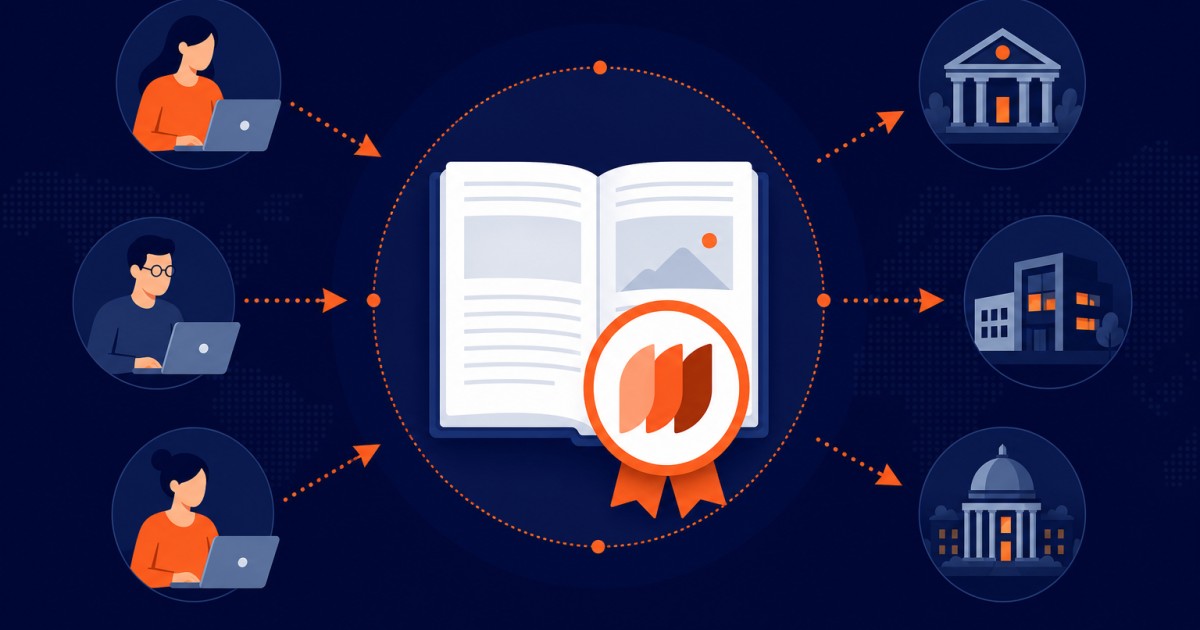
DOAJ indexing is what this guide covers, with the exact checks and fixes journals hit in production. More OJS help: Open Journal Systems guides.
DOAJ indexing
Your Journal Is Open Access. But DOAJ Has Rejected You, Twice.
You launched your open access journal with good intentions. Your peer review is rigorous. Your articles are legitimate scholarship. But DOAJ, the Directory of Open Access Journals, rejected your first application. You made changes, reapplied, and were rejected again.
You are frustrated. Your journal publishes quality work. Why is DOAJ still saying no?
The answer is that DOAJ indexing is not just about editorial quality. It is about meeting specific technical and policy standards that many editors do not understand. Over 60 percent of OJS journals are rejected on their first DOAJ application, most not because their research is poor, but because they do not meet DOAJ's technical requirements or do not understand what DOAJ actually evaluates.
Understanding why DOAJ matters, what it actually requires, and why journals get rejected, before you apply, dramatically increases your chances of acceptance on the first attempt.
This guide explains DOAJ indexing from a strategic perspective: why it matters to your journal, what DOAJ actually evaluates, and why rejection happens, written by OJS specialists who have guided 100+ journals through successful DOAJ indexing.
If you want expert guidance preparing your journal for DOAJ indexing, visit ojsguru.com for a free consultation.
What Is DOAJ and Why Should Your Journal Care?
DOAJ, Directory of Open Access Journals
DOAJ is a curated database of legitimate, high-quality open access journals. It is not an aggregator or search engine. It is a selective index where only journals meeting strict quality criteria are listed.
DOAJ's mission: Increase visibility, accessibility, and discoverability of quality open access research by indexing vetted journals.
DOAJ is not:
- A journal aggregator (like Google Scholar)
- A preprint server (like arXiv)
- An archive (like CORE)
- A paywall-removing service
DOAJ is a quality filter. Being in DOAJ signals to researchers, librarians, and institutions that your journal meets professional publishing standards.
Why DOAJ Indexing Matters for Your Journal
1. Researcher Discovery and Trust
When researchers search for journals in your field, they check DOAJ first. A DOAJ-indexed journal appears as legitimate scholarship. A non-indexed open access journal raises questions: "Why isn't it in DOAJ? Is something wrong with it?"
DOAJ indexing says: "This journal has been evaluated and meets quality standards."
2. Library Adoption and Discoverability
Librarians use DOAJ to discover journals to recommend to patrons. University libraries actively promote DOAJ-indexed journals to researchers. Being in DOAJ puts your journal in front of institutional decision-makers.
3. Author Confidence and Recruitment
Authors considering where to submit check if journals are indexed. A DOAJ-indexed journal attracts better authors because they know their work will be discoverable. Non-indexed journals struggle to recruit authors.
4. Funder and Institution Recognition
Research funders (NIH, NSF, EU research programs) recognize DOAJ-indexed journals as meeting open access standards. Some funding requirements explicitly mention DOAJ indexing as a criterion.
5. Indexing Service Integration
Being in DOAJ opens doors to other indexing services. Google Scholar, Scopus, and disciplinary databases look at DOAJ for quality signals. DOAJ indexing increases your likelihood of acceptance in other indexes.
6. Credibility and Legitimacy
DOAJ indexing is third-party validation of your journal's quality. It differentiates your journal from predatory journals and vanity presses. DOAJ listing says: "This journal has been independently evaluated and is legitimate."
Bottom line: DOAJ indexing increases journal visibility, attracts better authors, gains institutional recognition, and signals quality to the academic community.
What DOAJ Actually Evaluates
DOAJ's evaluation process focuses on two categories of criteria:
Editorial Criteria
- Is the journal conducting legitimate peer review?
- Are editorial processes transparent and documented?
- Are ethical publishing practices evident?
- Is the journal actively publishing?
Technical Criteria
- Is article metadata complete and standardized?
- Can automated systems harvest article metadata (OAI-PMH)?
- Are persistent article identifiers in place (DOI)?
- Is the journal properly configured for discoverability?
DOAJ does NOT evaluate:
- Research quality (that is what peer review does)
- Citation counts or impact factor
- Author prestige or institution
DOAJ evaluates whether your journal is professionally organized, properly configured, and committed to open access.
Why Journals Get Rejected by DOAJ
Over 60 percent of first-time DOAJ applications are rejected. Understanding the reasons before you apply prevents rejection.
Top 10 DOAJ Rejection Reasons:
1. OAI-PMH Not Working
Your journal's OAI-PMH endpoint is not responding to harvest requests. DOAJ cannot retrieve your article metadata automatically.
Prevention: Test your OAI-PMH endpoint thoroughly before applying. Use oaipmh.com to verify it works.
2. Incomplete Article Metadata
Articles lack required fields, author names, abstracts, publication dates, or keywords. DOAJ cannot properly index incomplete metadata.
Prevention: Ensure every published article has complete metadata before applying.
3. ISSN Invalid or Mismatched
The ISSN in your OJS system does not match your official ISSN registration. Or you have no ISSN at all.
Prevention: Obtain an ISSN before applying (free from your country's ISSN center). Verify it matches exactly in OJS.
4. Peer Review Process Not Documented
DOAJ cannot find clear evidence of your peer review process in your public policies.
Prevention: Document your peer review process explicitly in your journal's public policies section. Include review type (single-blind, double-blind, etc.), timeline, and process description.
5. No Contact Email or Non-Responsive
DOAJ cannot reach your journal's contact email, or emails bounce.
Prevention: Provide a monitored email address in your journal's contact information. Test that it receives emails.
6. Copyright and Licensing Unclear
DOAJ cannot determine who owns article copyright or under what terms they are licensed.
Prevention: Display a Creative Commons license on every article. Document copyright ownership clearly in your policies.
7. Archiving Plan Missing
DOAJ requires evidence that your journal has a plan to preserve content long-term.
Prevention: Participate in LOCKSS, PORTICO, or PKP Preservation Network. Or document your own institutional archiving plan.
8. Website Not Accessible or Outdated
Your journal's website is down, inaccessible, or shows no recent publication activity.
Prevention: Keep your website live and maintain regular publication schedule.
9. Open Access Status Unclear
DOAJ cannot confirm from your public information that all articles are freely available.
Prevention: Explicitly state on your homepage that the journal practices open access. Ensure articles are truly accessible without payment.
10. Editorial Board Not Identifiable
Your editorial board is listed without names, affiliations, or contact information. Real people cannot be verified.
Prevention: List board members with full names and institutional affiliations.
The Economics of DOAJ Indexing
Investment Required:
Getting ready for DOAJ indexing requires:
- Time to review and complete metadata (10-20 hours)
- Potentially hiring an expert to audit and fix gaps (1,000-3,000 USD)
- Setting up technical infrastructure like OAI-PMH and DOI registration (done if using OJS correctly)
Total cost for a journal to prepare: 1,000-5,000 USD in most cases.
Return on DOAJ Indexing:
Once indexed, you gain:
- Increased article downloads and visibility (20-50% increase typical)
- Better author recruitment (more submissions)
- Institutional recognition and library adoption
- Gateway to other indexing services
- Long-term credibility
These benefits compound year after year.
ROI Calculation:
A journal publishing 20 articles per year that increases submissions by 30% due to DOAJ indexing gains:
- 6 additional submissions per year
- At average submission-to-publication conversion of 30%, gain 2 additional published articles
- At 100 downloads per article average, gain 200 additional downloads annually
- Long-term author reach increases dramatically
Bottom line: The 1,000-5,000 USD investment in DOAJ preparation pays for itself through increased visibility and impact.
Common Misconceptions About DOAJ
Misconception 1: "DOAJ is just another index."
Reality: DOAJ is a curated quality filter. Being in DOAJ is harder than being indexed by Google Scholar or many other services.
Misconception 2: "We will get indexed eventually."
Reality: Without meeting DOAJ's criteria, rejection is permanent until you address the gaps. Waiting and reapplying without changes does not work.
Misconception 3: "DOAJ only indexes journals from wealthy countries."
Reality: DOAJ indexes quality journals from 180+ countries, including many developing nations. Geography is not a factor.
Misconception 4: "DOAJ charges for indexing."
Reality: DOAJ indexing is completely free. If someone asks for payment for DOAJ indexing, they are a scam.
Misconception 5: "We don't need DOAJ if we have Google Scholar."
Reality: Google Scholar and DOAJ serve different purposes. Google Scholar is a search engine. DOAJ is a quality filter. Both matter.
DOAJ Indexing Timeline
Planning phase: 2-4 weeks
- Audit current journal against DOAJ criteria
- Identify gaps
- Plan fixes
Fixing phase: 4-12 weeks
- Complete missing metadata
- Configure OAI-PMH and DOI registration
- Document peer review and policies
- Set up archiving
Application phase: 1-2 weeks
- Complete DOAJ application form
- Submit
Evaluation phase: 6-12 weeks
- DOAJ evaluates your application
- May request additional information
- Decision
Total timeline: 3-6 months from starting audit to DOAJ acceptance.
When to Apply for DOAJ Indexing
Good timing to apply:
- You have published at least 3-5 issues showing consistent output
- Your OAI-PMH endpoint is working
- Your article metadata is complete across all published articles
- You have documented policies for peer review, copyright, and archiving
- You have an ISSN
- You are ready to commit to DOAJ's standards long-term
Bad timing to apply:
- Your journal is brand new (no publication history)
- Your metadata is incomplete
- Your OAI-PMH is not configured
- You cannot demonstrate peer review
- You have technical or policy gaps you know about but haven't fixed
Applying when you are not ready wastes time and results in rejection. It is better to prepare thoroughly and apply once, than to apply multiple times.
Post-DOAJ Acceptance Responsibility
Once DOAJ indexes your journal, you have ongoing responsibilities:
Maintain DOAJ compliance:
- Keep publishing regularly
- Maintain complete metadata for all articles
- Keep your OAI-PMH endpoint functional
- Stay committed to open access
- Update policies and editorial information as needed
DOAJ audits journals periodically:
- If you fall out of compliance, DOAJ will delist you
- Delisting damages your journal's credibility
- Delisting is hard to reverse
Once indexed, you are accountable for maintaining standards.
When to Call in a Professional
DOAJ indexing is achievable for most journals, but some situations benefit from professional help:
- Your journal has been rejected once or twice and you do not understand why
- You have large back catalogs with incomplete metadata
- You want expert guidance before applying to maximize acceptance chances
- Your OAI-PMH or technical infrastructure needs optimization
- You need someone to manage the preparation process from audit through application
OJS Guru performs complete DOAJ pre-submission audits, identifying every gap, fixing configuration issues, and preparing your journal for successful DOAJ acceptance.
👉 Get a free consultation at ojsguru.com
Summary
DOAJ indexing is a critical milestone for open access journals. It signals quality, increases visibility, and opens doors to other indexing opportunities. The investment in preparing for DOAJ is small compared to the long-term benefits.
Why DOAJ matters:
- Researcher discovery and trust
- Library adoption
- Author recruitment
- Funder recognition
- Gateway to other indexes
What DOAJ evaluates:
- Editorial rigor (peer review, transparency, ethics)
- Technical standards (metadata, OAI-PMH, persistent identifiers)
Why journals get rejected:
- OAI-PMH not working
- Incomplete metadata
- Invalid ISSN
- Undocumented peer review
- Missing contact information or policies
- Unclear copyright and licensing
- No archiving plan
- Non-functional or outdated website
- Unclear open access status
- Non-identifiable editorial board
Path to success:
- Audit your journal against DOAJ criteria
- Fix identified gaps
- Complete metadata for all articles
- Document all policies and processes
- Apply once you meet all requirements
- Maintain compliance after acceptance
If you want expert help preparing for DOAJ indexing, contact OJS Guru at ojsguru.com. We audit journals against DOAJ criteria and prepare them for successful acceptance.
OJS Guru is a professional Open Journal Systems service provider specializing in OJS installation, customization, migration, and technical support for research journal publishers in 20+ countries. Visit ojsguru.com to request a free consultation.
